Water
Do you know your Allis from your Twaite?
Fish! We are talking about fish. Specifically, fish called shads - allis shad and twaite shad. The allis shad is a regular visitor to the Tamar and is one of the reasons that our river is so special. It is designated as a feature of the Tamar Special Area of Conservation. The twaite shad probably visits as well, but... read on!
The allis shad is a type of herring and is widespread in the Northeast Atlantic, western Baltic sea and western Mediterranean Sea. There are good populations on the French coast, but the Tamar is the strongest spot for them in the UK. They weigh up to 5lb, 12inch to 14 inch (30 to 60cm). Weights are quoted in pounds here, which is how they were written in fishing records. They have a distinctive dark spot behind the gill cover and a row of spots.
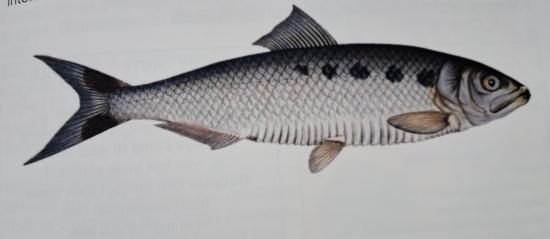
The twaite shad has a similar range, perhaps a bit further north and south along the Atlantic coast and not into the Baltic, and the two fish look much alike. However, the twaite is smaller - up to 2lb and rarely exceeding 16 inches (40cm). The twaite also has spots, but you cannot use these for identification as variations between individuals and interbreeding confuses things.
Allis shad are anadromous, which means they return to fresh water to spawn. In the Tamar, they spawn around Calstock. The Tamar populations reported as slowly rising, but a lot of the adults appear to die after spawning. The twaite shad appears to spawn around the tidal limit, so generally not seen up-river.
Shad are supposedly good to eat - like herring - and were considered food fish until the 1800s. However, shad numbers have reduced significantly in Britain in recent decades. Shad are caught as by-catch by commercial fishing boats and are disposed of, but the biggest cause of population reduction is the obstruction of rivers by dams, sluices and weirs. Nowadays these structures are often termed "fish friendly" but this really applies only to salmon and trout. The shad are smaller and weaker and cannot make it past them.
Shad are sometimes caught by anglers targeting mackerel with spinners or feathers. However, it is illegal to target shad specifically, and any shad inadvertently caught must be returned to the sea immediately without injury or harm. Schedule Five of the Wildlife and Countryside Act (1981) applies, as does Appendix III of he Bern Convention. The fishing records for both species quoted above were achieved before the legal protections were imposed.
If you want to appear knowledgeable, the allis shad's full name is alosa alosa, whilst the twaite is alosa fallax.
So now when you hear someone use the vulgar expression "I fell a over t" you'll know they are referring to our native shad - "allis over twaite"
© Peter Plume, January 2026, All rights reserved
This article is protected by copyright - please contact editor@landulph.org.uk if you want to use it.