

Groups
Landulph Film Club
Meets on the third Tuesday of the month during the winter months (November to May). Doors of the Memorial Hall open at 7pm for a free drink (hot, cold or wine) within the price of your ticket, and an opportunity to socialise before the film starts at 7.30pm. 2025/6 season tickets are the same price as last year, £35, and on-the-night tickets £7.50 (please pay by card). So, as long as you come to more than four films, it is still cheaper to have an annual subscription. Guests and new members are warmly welcomed.
Programme for 2025/2026
Juror #2 and Downton Abbey, the Grand Finale shown in 2025 were much enjoyed.
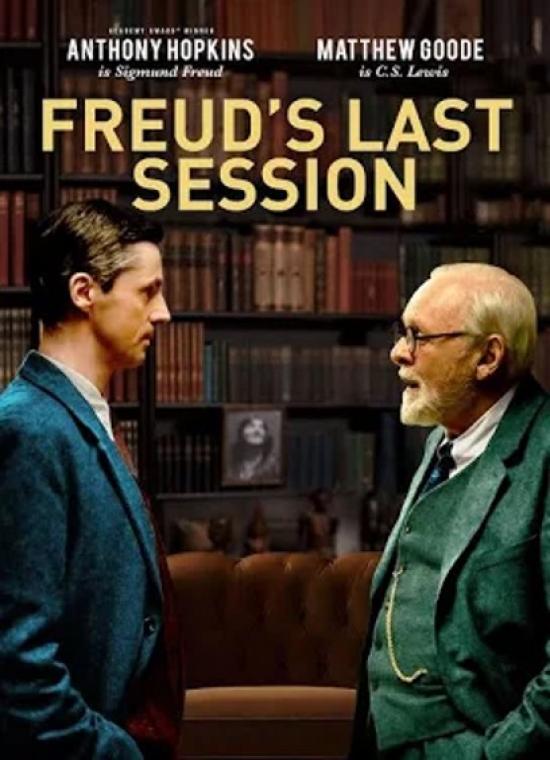
Tuesday 20 January 2026: Freud's Last Session
A drama depicting a fictional meeting between psychiatrist Sigmund Freud (Anthony Hopkins) and author C.S. Lewis (Matthew Goode) at Freud's London home on the eve of World War II. While ostensibly a debate about the existence of God and religion, the film also explores the men's personal struggles, including Freud's declining health and his complex relationship with his daughter Anna, and Lewis's past trauma as a World War I veteran. The film interweaves these personal narratives with fantastical sequences and flashbacks to a war-torn world, creating a dynamic journey beyond the confines of Freud's study.
Tuesday 17 February: Hot Fuzz
A British buddy cop action comedy film directed by Edgar Wright, who co-wrote the film with Simon Pegg. Pegg stars as Nicholas Angel, an elite London police officer, whose proficiency makes the rest of his team look bad, causing him to be re-assigned to a West Country village where a series of gruesome deaths takes place. Nick Frost stars alongside him as Police Constable Danny Butterman, Angel's partner. Other cast members include Simon Pegg, Jim Broadbent, Timothy Dalton, Billie Whitelaw, Edward Woodward, Rafe Spall, Olivia Coleman, Bill Nighy and more …
Hot Fuzz is the second and most commercially successful film in the Three Flavours Cornetto trilogy, following Shaun of the Dead and followed by The World's End. Principal photography took place in Wells, Somerset, for eleven weeks, then ten artists worked on VFX. Released in 2007 in the United Kingdom, Hot Fuzz received acclaim from critics and grossed US$80 million worldwide on a budget of $12–16 million.
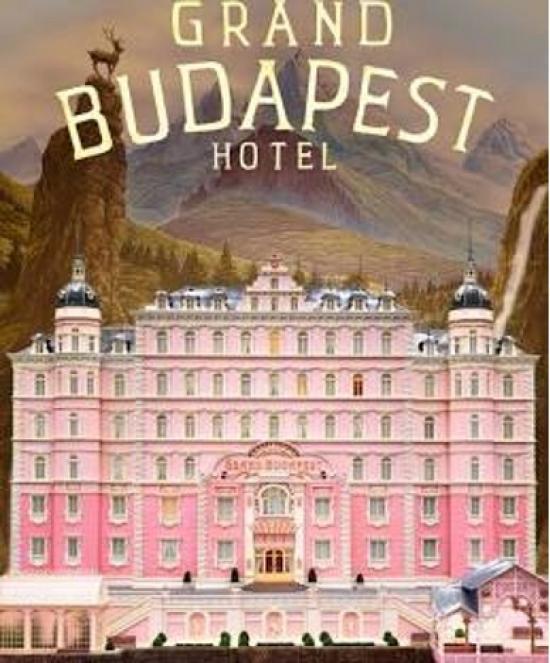
Tuesday 17 March: The Grand Budapest Hotel
Released in 2014, this film’s seventeen-actor ensemble cast is led by Ralph Fiennes as Monsieur Gustave H., famed concierge of a twentieth-century mountainside resort in the fictional country of Zubrowka. After being framed for the murder of a wealthy dowager (Tilda Swinton), he and his recently befriended protégé Zero (Tony Revolori) embark on a quest for fortune and a priceless Renaissance painting amidst the backdrop of an encroaching fascist regime.
Writer and director Wes Anderson and longtime collaborator Hugo Guinness conceived The Grand Budapest Hotel as a fragmented comedy-drama tale following a character inspired by a mutual friend. Filming took place in eastern Germany from January to March 2013. The film's soundtrack was composed by French composer Alexandre Desplat, incorporating symphonic and Russian folk-inspired elements and expanding on his earlier work with Anderson. The film explores themes of fascism, nostalgia, friendship, loyalty, and explores the function of colour as a storytelling device.
The Grand Budapest Hotel was nominated for nine awards at the 87th Academy Awards including Best Picture, winning four, and received numerous other accolades. Since its release, The Grand Budapest Hotel has been assessed as one of the greatest films of the twenty-first century.
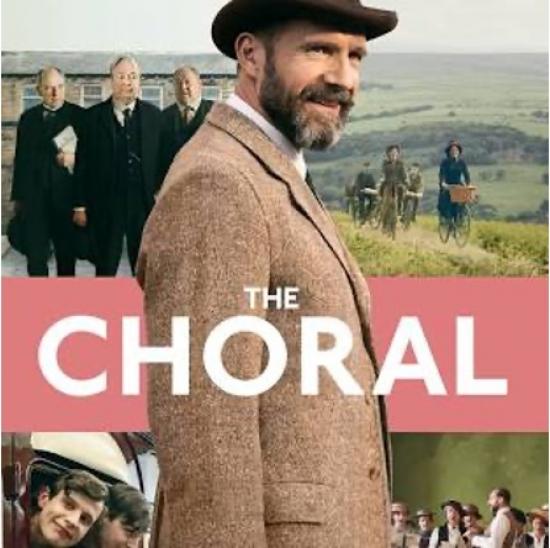
Tuesday 21 April: The Choral
Alan Bennett’s new film, directed by Nicholas Hytner, is “a quiet and consistent pleasure: an unsentimental but deeply felt drama which subcontracts actual passion to the music of Elgar and leaves us with a heartbeat of wit, poignancy and common sense”, writes Tim Dowling in The Guardian. “Music itself mysteriously exalts and redeems the community, and I mean it as the highest possible praise when I say that The Choral reminds me of Victoria Wood’s musical That Day We Sang, about the recording of Purcell’s Nymphs and Shepherds by Manchester Children’s Choir.
“The Choral is about men in a fictional Yorkshire town during the first world war who are variously too old or too young to fight, and the women who have to deal with the menfolk’s repressed emotions and their own. The place is upended by the arrival of Dr Guthrie (Ralph Fiennes) who is to be the choirmaster, directing the music society’s annual production; he scandalises some with the fact that he once lived in Germany and has a scholar’s love of that country’s literature and music – as well as the fact that he is a bachelor who had a close friendship with another young man now serving overseas.
“German composers such as Bach, Beethoven and Handel being unacceptable, Dr Guthrie proposes to his ragtag crew of amateurs a radical new production of Elgar’s The Dream of Gerontius, its theme of death being the more heart-wrenching in the circumstances. He gets permission from Elgar himself for this performance, though not his daringly interpretive new variations.
“The humour is delivered with the same conviction and discreetly weighted force as the sadness. Perhaps this is Bennett’s late style: a wintry, comic acknowledgment of mortality.”
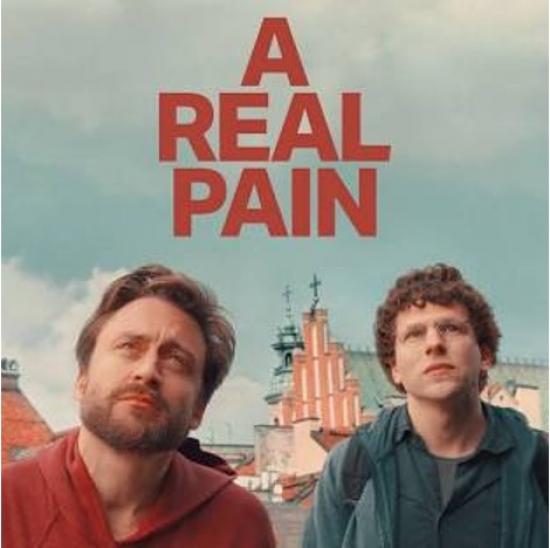
Tuesday 19 May: A Real Pain
Mismatched cousins David (played by the writer Jesse Eisenberg) and Benji (Kieran Culkin) reunite for a tour through Poland to honour their beloved grandmother, a Holocaust survivor. The adventure takes a turn when the odd-couple's old tensions resurface against the backdrop of their family history, offering us a film that's both uncomfortable and deeply human.
One reviewer writes: “The dynamic between David and Benji is the heart of the film, and it’s fascinating to watch how Eisenberg builds this relationship without falling back on cliches. They’re not just opposites who magically complement each other; there's mutual envy disguised as impatience, an intimacy that borders on irritation. David, with his seemingly stable life, envies Benji's raw authenticity, while Benji despises David's conformity but secretly craves that very stability. The film never spells this out explicitly, but it's there-in the sidelong glances, the awkward silences, the arguments that start over trivial things and quickly spiral into personal attacks laced with old resentments.
“Eisenberg's script is sharp and layered, dealing with collective memory and the weight of history, with silence, for example, used as a powerful narrative tool where the sound drops out entirely, forcing the viewer to sit with the space and the emptiness-both physical and emotional.
“If there's a minor critique to be made, it might be the film's own restrained nature. For some, it may feel too small, almost anticlimactic in its refusal to deliver a big cathartic moment. But that's precisely the strength of A Real Pain. It understands that real emotional impact rarely comes in dramatic explosions. It builds in layers, in small gestures, in prolonged silences and interrupted conversations.”
Contact
James Jermain, Chairman, jamesdjermain@gmail.com
Clare Tagg, Treasurer, clare@taggoram.co.uk
Phillida Jermain, Secretary, phillidajermain@gmail.com
Anne Erskine, Social Secretary, annersk@yahoo.com
Clubs & Societies
- Cargreen Village Choir
- Cargreen Yacht Club
- Friday Cafe
- Landulph Film Club
- Landulph Gardening Club
- Landulph Good Companions
- Landulph Short Mat Bowls
- Mahjong
- Taiji
Organisations
- Landulph Festival CIC
- Landulph Memorial Hall
- landulph.org.uk Community Website
- Landulph Parish Church of St Leonard and St Dilpe
- Landulph Primary School
- Landulph Under Fives